Insights
Notes on Shopify, performance and shipping products.
-
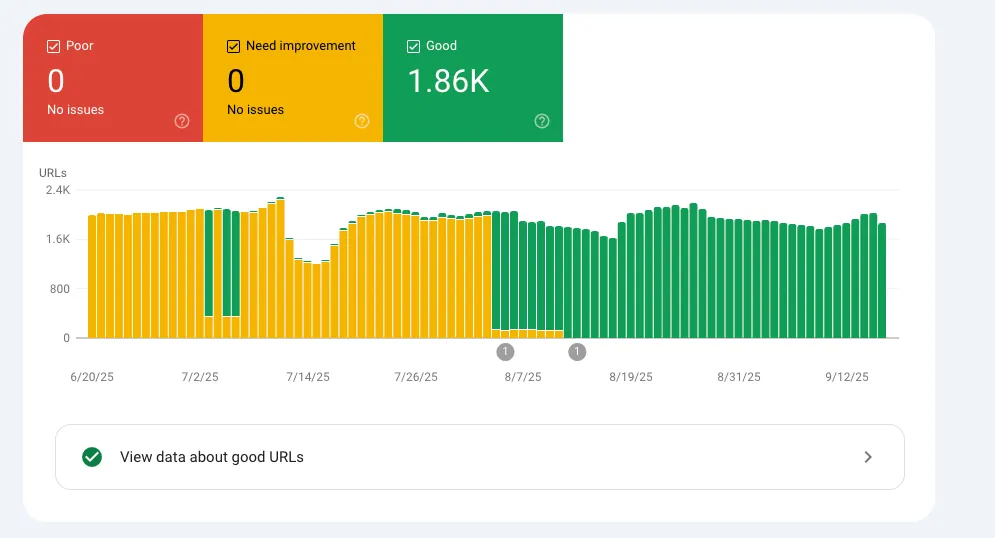
When Search Console agrees: lab scores, field data, and the 28-day wait
A Lighthouse 95 is one phone in a lab. This is what Google Search Console saw on real visitors: 1,926 pages with an INP problem, then 1,861 good URLs and none in the other two columns.
Read the post -
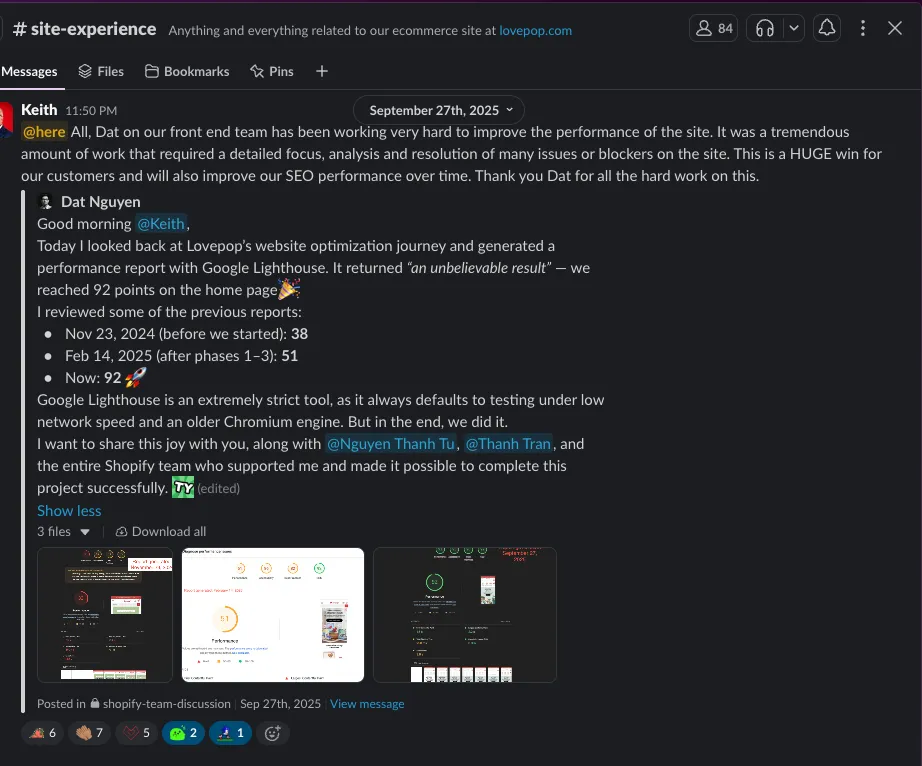
Presenting performance to people who do not read waterfalls
The report that closed the Lovepop programme: four slides, three numbers, one metaphor, and what the client said when it landed.
-
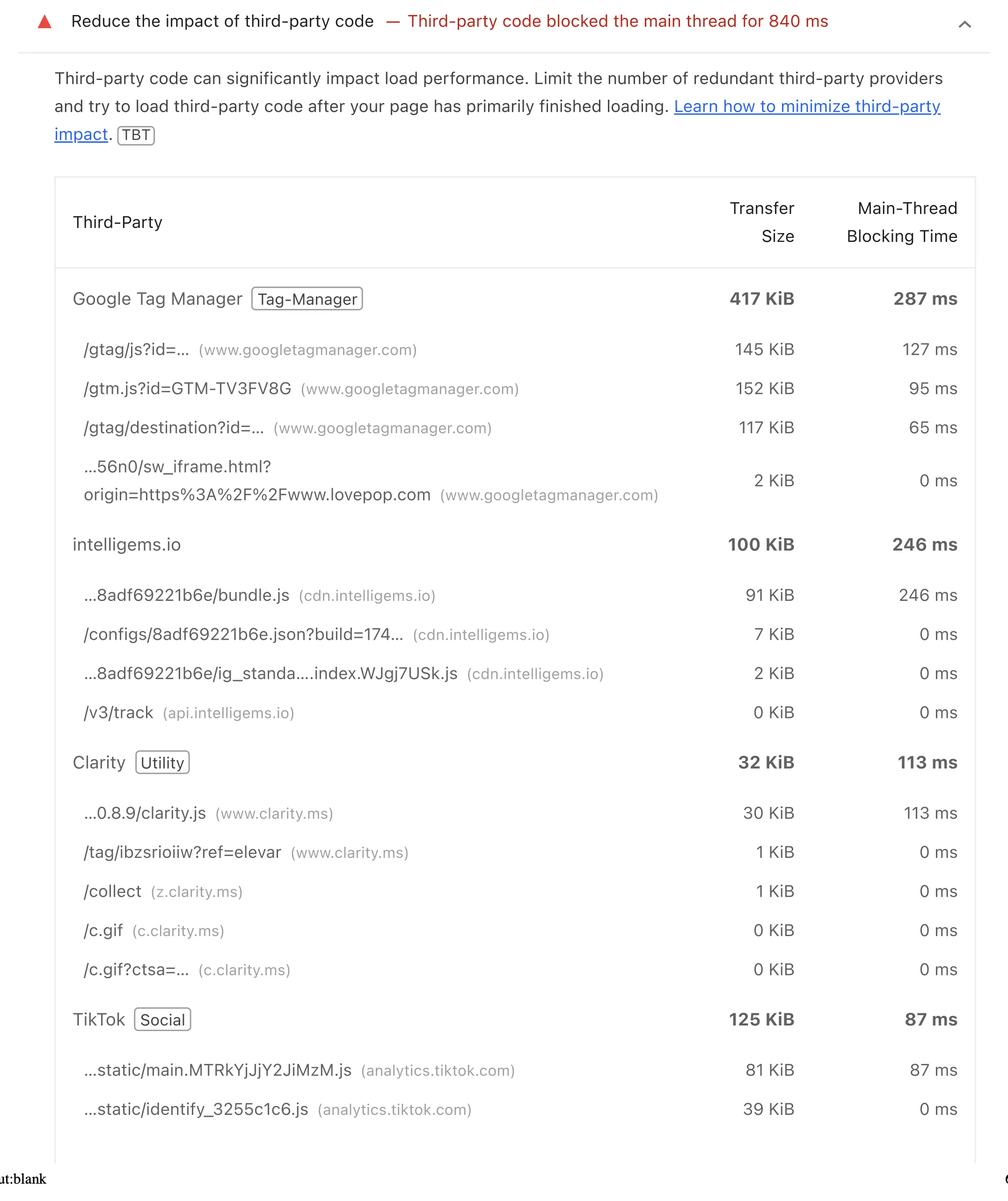
Sixteen third-party scripts: the audit
What the tag stack on a Shopify Plus store was costing in main-thread time, how each tag was handled, and what the report said about them a year later.
-
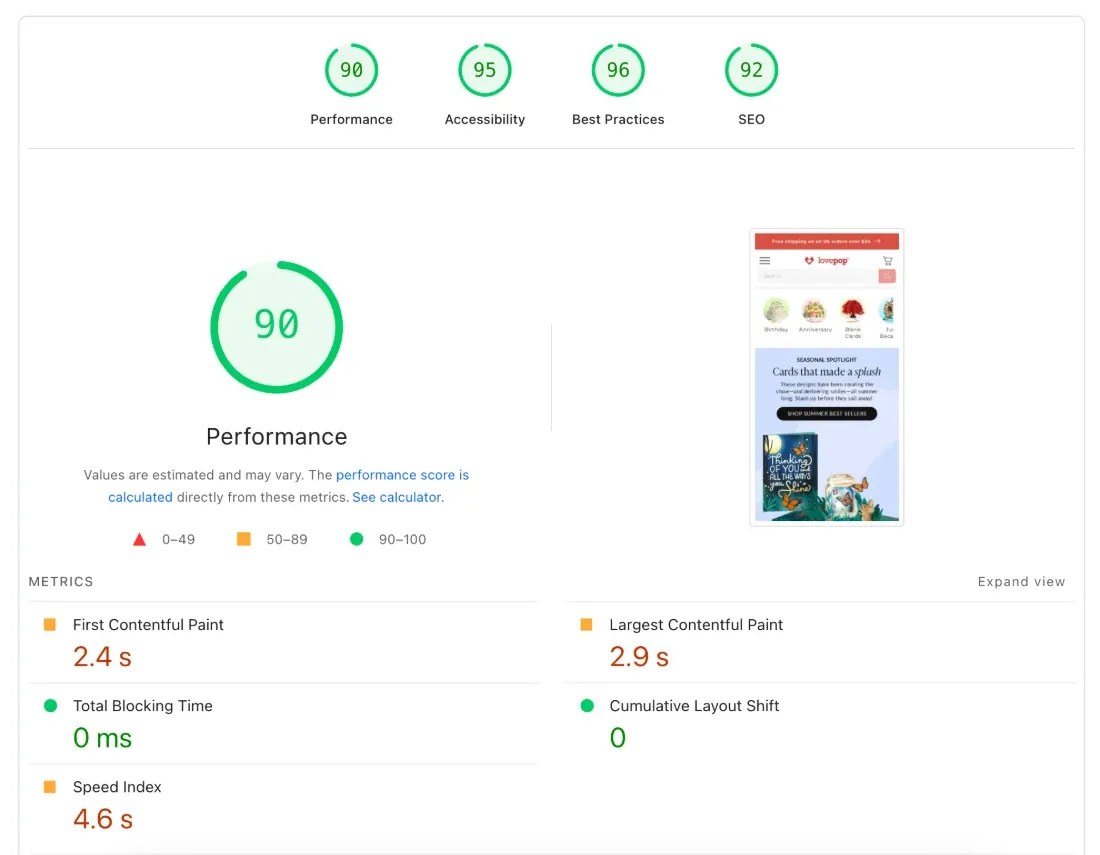
Delay, import on demand, lazy-load: three tools, and which one each component needs
Phases 3 to 6 of a Shopify performance programme: the three ways to move code off the critical path, the rule for choosing between them, and the readings from 51 to 95.
-
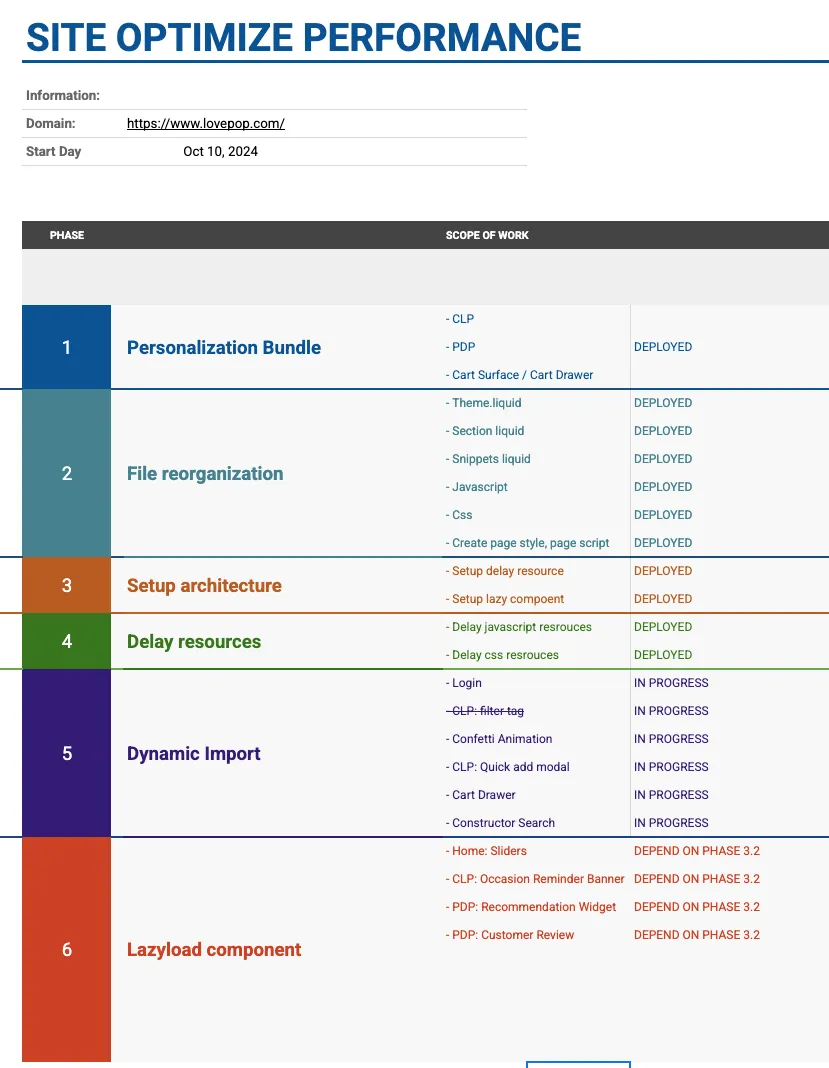
One script and one stylesheet per page
The unglamorous phase of a Shopify performance programme: reorganising a theme so each template loads only its own code, and what the score did while we did it.
-
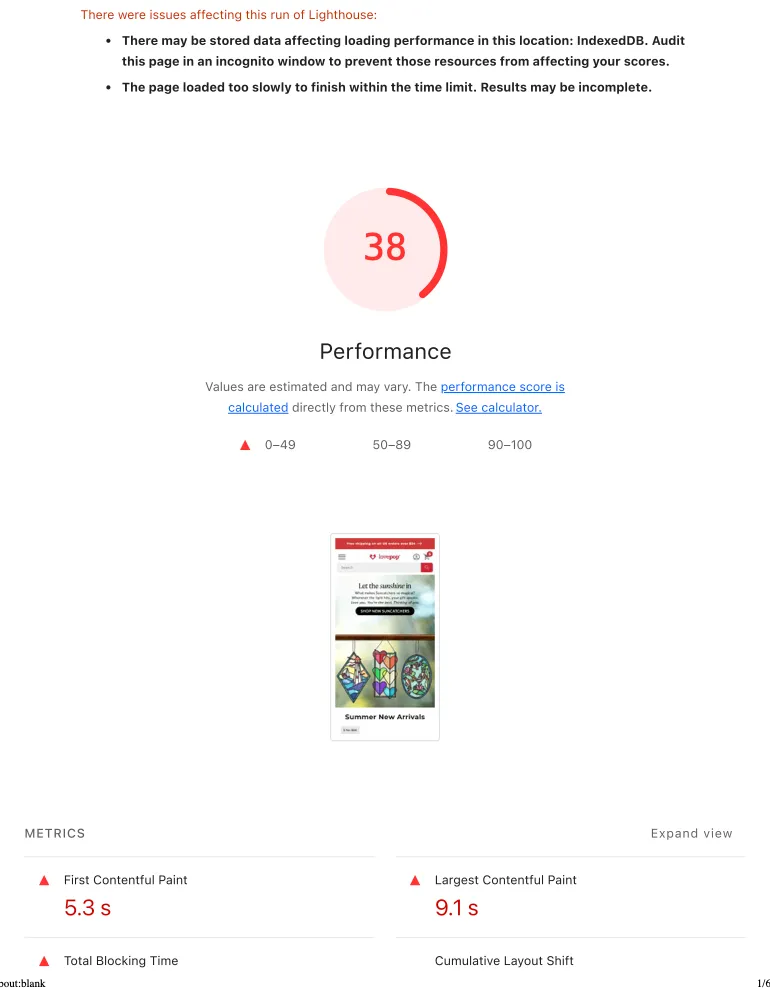
The before report: what a failing Lighthouse score is made of
Reading the before report on a Shopify Plus home page: why a 9-second LCP was a JavaScript problem, not an image problem, and which numbers told us where to start.
-
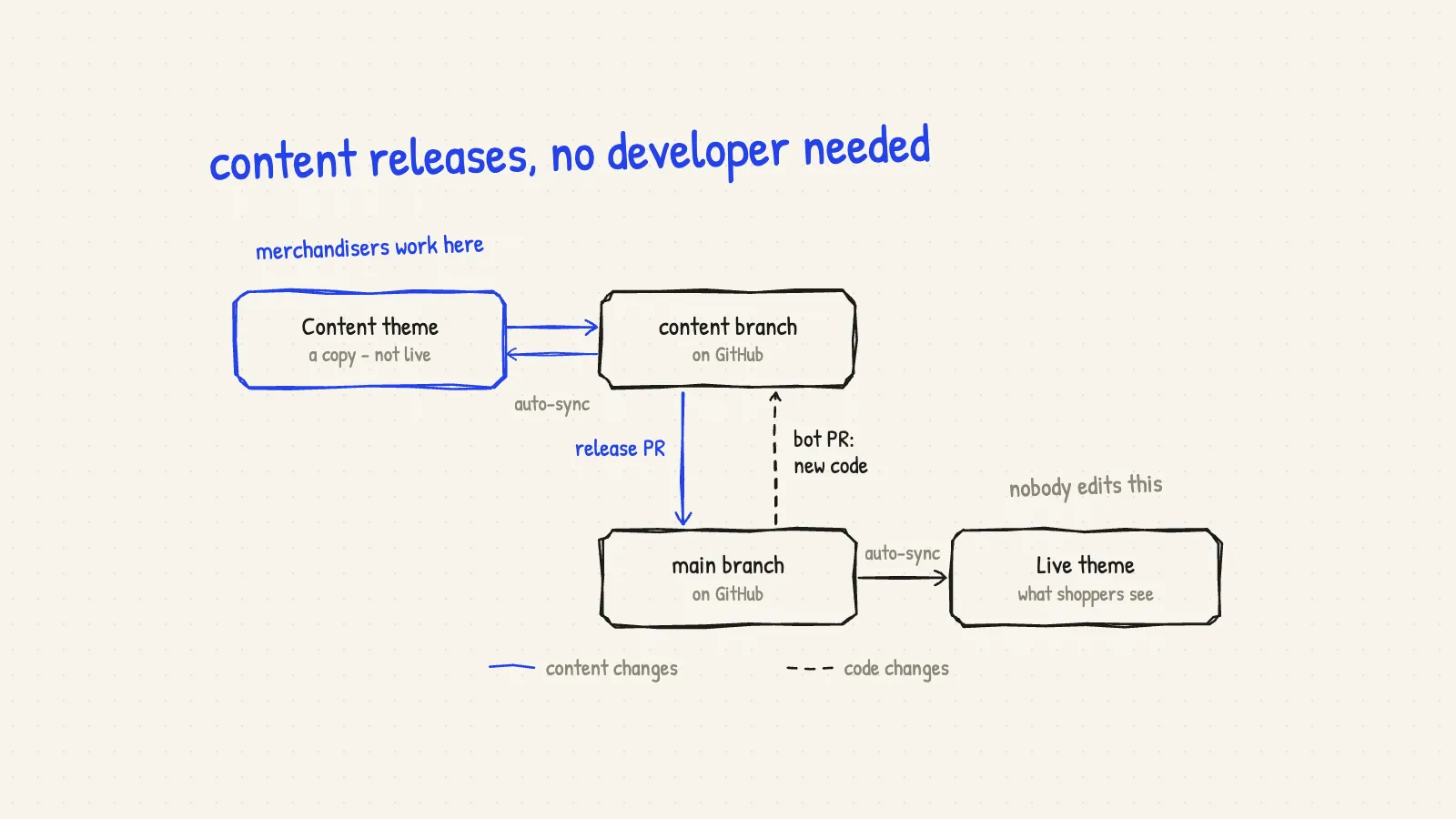
Safe theme releases, no developer needed
A simple Shopify and GitHub setup that lets the merchandising team change and release the store on their own, with very little risk.
-

The demo is the deliverable
Gathering requirements, reviewing designs before they are built, and showing non-technical people how to use what you made - the parts of the job that decide whether the code was worth writing.
-

When Shopify is too much: a tea bar with one till
A neighbourhood boba shop needed to sell online without running a second system behind the counter.
-

Making a large codebase legible to AI
Generated code was plausible and wrong in the same ways every time.
-

One component library, several products
A shared core repository across a hosting dashboard and the tools around it - what belongs in it, what does not, and the review habits that keep it from rotting.
-

Sections a merchandiser can actually drive
Building a Shopify theme for thirty markets means the theme editor is the product.
-
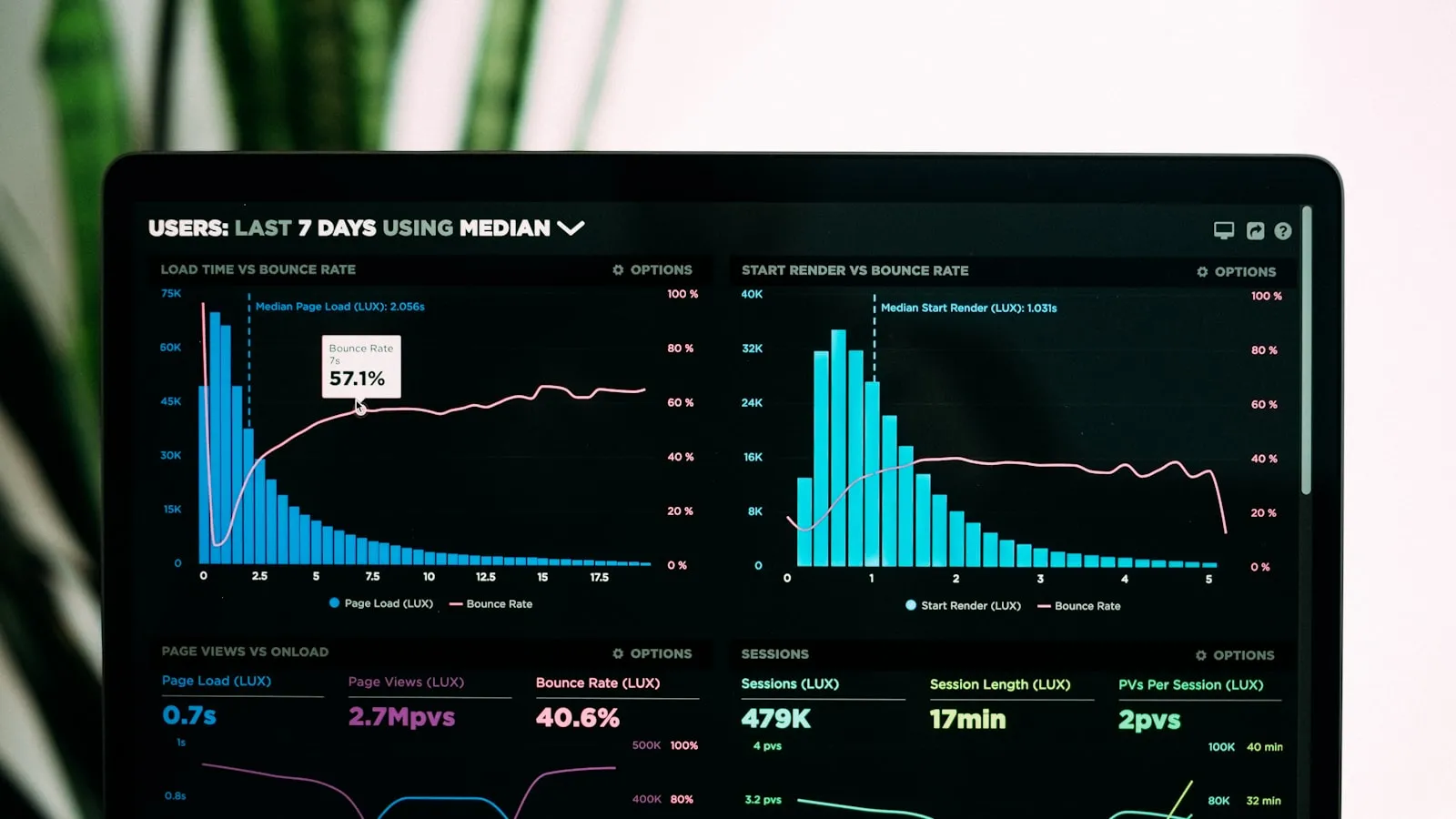
A site health dashboard executives actually open
An internal app showing real-time storefront health and the state of every third-party integration - built for people who will give it fifteen seconds.
-

Theme deploys that do not need a developer awake
A GitHub Actions workflow that watches the live Shopify theme, detects what merchandisers changed, and opens a pull request - so a team twelve hours away can ship without waiting.
-

React inside an application you are not allowed to rewrite
Adding modern components to a mature Ember platform, screen by screen, without a migration project - and what that constraint teaches you about component boundaries.
-
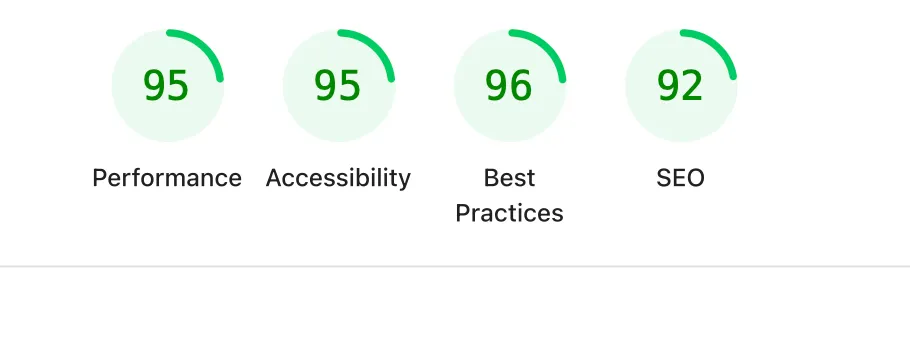
19 to 95: a year of performance work on a Shopify Plus store, stage by stage
The full account of the Lovepop performance programme: where the home page started (a Lighthouse 19 on the worst run), how six phases took it to 51, then 59, then 90, then 95, what each reading showed, and what Search Console, the visitor data and the client said at the end.
-

Checkout extensibility: less rope, fewer ways to hang yourself
Moving checkout customisation from a Liquid file you could do anything in, to an extension surface that says no a lot.
-
Tips: How i can speed up build landing page
How reusable sections, conditional settings, and structure sped up two landing pages and five PDP sections in 24 hours.